
A container ship catching low sunlight on calm water.

Shipping from China to Singapore

Tell us whether the goods are for local delivery in Singapore, onward transport, or both. AndaFreight checks transport, transfer and delivery costs to the agreed address or next carrier. Confirm the final destination and where each provider’s responsibility ends before booking.

Request a door-to-door quote
Choose your transport method

Transport methods from China to Singapore

Choose international transport and final delivery together. Express uses a courier from China; sea-plus-parcel combines ocean freight with local parcel delivery after import release.

Express courier to your door

01

Pickup in China

We arrange courier pickup for accepted, sealed parcels. Provide the China contact, ready window, contents, values, packed measurements, weights and Singapore import or onward instructions.

02

Transport & release

We confirm the courier for the goods and address, then arrange labels, export handover and customs-data coordination.

03

Delivery to your door

After import release, accepted parcels go to the agreed Singapore address. Use the quote checklist for the postcode, building, unit and phone. Confirm any special receiving arrangements with the carrier.

Best fit
Samples, replacements or a few cartons; compare the complete address price with air cargo.
Air freight with final delivery

01

Pickup in China

We arrange collection or supplier handover after checking packed measurements, gross weight and loading needs.

02

Transport & release

We book airline space and export handling, coordinating documents with the importer, declaring agent and cargo terminal.

03

Delivery to your door

After Changi handling and release, we arrange a suitable van or truck. Confirm the loading bay, access window, permit requirements and who unloads.

Best fit
Urgent cartons or pallets when earlier receipt justifies the premium; price an urgent batch separately if the rest can move by sea.

Sea freight + local parcel delivery

01

Pickup in China

We collect or receive goods, checking carton acceptance and addresses. Agree consolidation, repacking and labels before dispatch.

02

Transport & release

We arrange ocean transport, export documents and destination unpacking, coordinating import clearance with the declaring agent.

03

Delivery to your door

After LCL unpacking and local import release, accepted, labelled cartons enter the Singapore parcel network. Confirm service for each postcode and receiving conditions before booking the local leg.

Best fit
Sturdy, individually packed cartons within the carrier’s limits, without pallet handling or freight-unloading needs.

Ocean LCL + truck delivery

01

Pickup in China

We collect or receive suppliers’ goods, checking the packing list, consolidation, pallet work and cutoff.

02

Transport & release

We book shared-container transport and destination unpacking, coordinating import clearance with the appointed agent.

03

Delivery to your door

After release and availability at the named depot, we arrange a suitable vehicle for cartons or pallets. Confirm loading-bay access, the receiving slot, package count and who unloads.

Best fit
Smaller planned loads; compare the complete cost with air and FCL.

Ocean FCL with final delivery

01

Pickup in China

We arrange factory loading or consolidate suppliers’ goods first. Confirm access, equipment and who secures the load.

02

Transport & release

We book the container and vessel, coordinating export documents and the import plan. Agree container delivery or depot unpacking.

03

Delivery to your door

After terminal release and availability, we arrange delivery to the named warehouse. Confirm container access, the receiving slot, waiting, unloading and empty return.

Best fit
Dedicated, heavy or larger loads that fit the container and receiving site.
Parcel, pallet or container

Choose how the shipment reaches your door

Name the local address or onward-carrier handover point. Confirm receiving and vehicle restrictions; offshore, restricted or controlled premises need a serviceability check.

  1. 01China collection
  2. 02Ocean freight
  3. 03Import release
  4. 04Unpack, sort & label
  5. 05Parcel carrier acceptance
  6. 06Address delivery

Local parcel delivery

Individually packed cartons within the carrier’s limits. Confirm the postcode, phone, receiving hours, access and signature instructions; the site must accept normal parcel handover.

Pallets & large items

Freight vehicles for pallets, furniture or machinery. Confirm a suitable dock or forklift, or request pricing for a liftgate or specialist vehicle.

Whole-container delivery

Confirm trailer access and unloading within the booked slot. Otherwise, compare depot unpacking and onward delivery, including handling and empty return.

Track each handover

A courier label may exist before pickup; the first acceptance scan confirms network entry. Keep sea arrival, release, onward-carrier handover, local dispatch and delivery records separate.

From pickup to receipt

How door-to-door delivery works

Name the importer or party handling the onward transfer, declaring agent and payer. Agree the final handover before dispatch.

  1. Supplier pickup or China handover

    Confirm the China pickup or handover, contact, ready date, package count, packed measurements, gross weight, access and cutoff.

  2. China receiving and export

    Match goods to the packing list; complete agreed packing, carrier acceptance and commercial/export documents.

  3. Main transport

    Track the booked departure, transfers and arrival against the receiving deadline or onward connection.

  4. Import clearance

    The declaring agent checks the documents, goods and movement to determine local import, transhipment or other applicable procedures.

  5. Final-mile delivery

    Confirm the required release and cargo availability, then arrange local delivery or onward transfer to the agreed place and time.

  6. Receipt and closure

    Check count and condition; report discrepancies with photos and the shipment reference. Keep the delivery or onward-handover record; signatures depend on the booked service.

Door-to-door names the pickup and delivery points; it does not automatically mean DDP. Confirm the importer, payer, clearance scope and any duty, tax, unloading, inside delivery or storage charges.

Check the quoted charging rules

How the charges should be itemised

Compare collection, freight, handling, declarations and the agreed final handover. Identify terminal transfers, storage and rebooking costs for onward goods; show applicable duty and GST separately.

An FCL price is per booked equipment unit. LCL normally needs the quote's weight/measurement definition and minimum for each charge. Eight cartons at 60 × 40 × 50 cm total 0.96 m³. If the applicable freight minimum is 1 m³ and the weight basis does not exceed it, freight is billed at that minimum. Destination handling, permit work and delivery may also have per-shipment minimums; they are not necessarily included in the ocean rate.

Those eight cartons have a total dimensional weight of 160 kg at 6,000 cm³/kg, or 192 kg at 5,000. To find chargeable weight, use the actual service’s divisor and compare with gross weight under its per-piece or shipment-total rule, then apply rounding and minimums. Recalculate if the final packing changes.

Sea freight with parcel delivery: pricing

Confirm a combined door rate or separate sea, handling and parcel charges. Check sea minimums, each carton’s dimensions and gross weight, relabelling, delivery-area fees and tax treatment. Do not add charges already included.

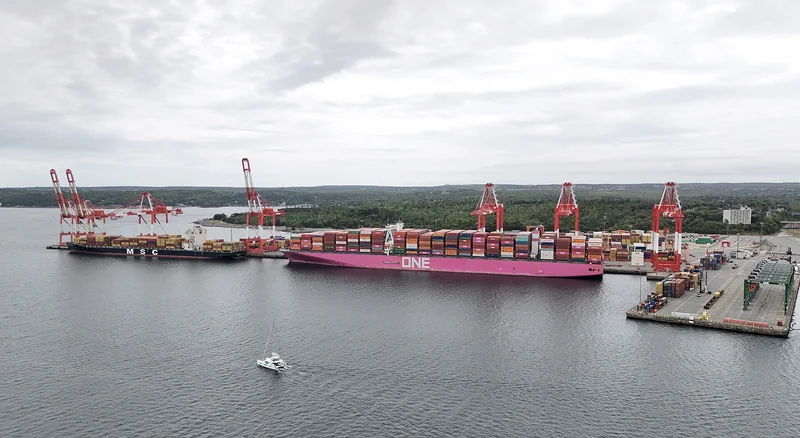
Two bright pink container ships moored across a harbor basin.
Destination-specific handover

If the goods are changing vessels

Confirm both vessel bookings, inbound and outbound terminals, onward space and cargo cutoff. Name who arranges the transfer and pays storage or rebooking if the first vessel is late. A through bill and separate bookings may allocate responsibility differently; get each provider’s final handover in writing.

Have the declaring agent verify the goods, shipping documents and Free Trade Zone (FTZ) movement. For qualifying transhipment, non-controlled goods staying within the same FTZ need no transhipment permit; controlled goods or moves between FTZs need the applicable permit. If the movement does not qualify as transhipment, check import/export requirements. Confirm authorisations, the transfer vehicle and fees before relying on the connection. Singapore Customs permit types

Clearance checkpoint before dispatch

For local import, confirm the importer, declaring agent, product approvals and permit requirements or exemptions. Where an import permit is required, obtain it before importation and follow its conditions. Prepare the invoice, packing list and transport documents in time for the agent’s cutoff. Singapore Customs import procedures

Time to the address

What changes the delivery estimate

Request an estimate to the local address or onward-carrier handover, with cargo-ready assumptions, quote validity and the required date.

Origin clock

Supplier readiness, pickup access, consolidation, documents and the carrier cutoff determine the first workable departure.

Main-carriage clock

Space, transfers, weather and carrier changes can alter the estimate; track both sailings when goods connect onward.

Destination clock

For local goods, confirm release and the receiving slot. For onward goods, confirm transfer and carrier acceptance before cutoff. Inspections, storage or missed connections may delay completion.

Compare complete delivery offers

Compare charges and delivery requirements

Use the same China handover, packed goods, movement, final handover point and deadline. For onward cargo, price the terminal transfer and agreed next-carrier handover separately.

MethodBilling basisExtra charges to checkDelivery requirements
Express courier to your doorHigher of gross or dimensional weight under the quoted rule, rounding and minimums.Pickup, address and courier surcharges; import charges.Accepted goods, release, full address and carrier access.
Air freight with final deliveryQuoted chargeable weight, divisor, rounding and minimums.Origin/airport handling, declarations and final vehicle.Release, facility availability, receiving slot and unloading.
Sea freight + local parcel deliveryQuoted sea weight/volume rule and minimums, plus parcel billable weight.Unpacking, labels and delivery-area fees; check combined-rate inclusions.Local import release and cartons accepted for the postcode and receiving conditions.
Ocean LCL + truck deliveryQuoted weight-or-measure rule, rounding and minimums.Consolidation, unpacking, release, declarations and delivery.Named depot, release, availability, suitable vehicle and receiving slot.
Ocean FCL with final deliveryContainer type and route.Origin/terminal work, declarations, delivery, waiting/storage, unloading and empty return.Release, availability, trailer access, receiving slot and unloading capacity.
Confirm local and onward quantities

What to send for a door-to-door quote to Singapore

Duty and GST are suspended while goods are stored in an FTZ; consumption there or entry into customs territory for local sale or consumption can trigger payment. For local stock, confirm applicable taxes, payer, release, unpacking and delivery costs. Singapore Customs on goods in FTZs

For mixed local and onward loads, mark each allocation. Have the agent confirm the authorised separation point, documents and permits for each quantity, and dispatch dates. Include sorting and both handovers in the quote.

Use the checklist below and identify any transport already booked. AndaFreight can check the remaining legs.

Request a shipment quote

  • China pickup or handover address, contact, ready date and loading restrictions.
  • Goods, material or use, origin, value, package count, packed dimensions and individual gross weights; mark local and onward quantities.
  • Batteries, liquids, magnets, timber, oversized pieces or other acceptance and handling restrictions.
  • Importer and declaring-agent contacts, trade term and named place, available documents or approvals, and payer.
  • Local address: six-digit postcode, street, building, level/unit and recipient phone. Onward cargo: final country and named carrier handover point.
  • Required receiving date or onward cutoff, both booking references and terminals, existing quote and any transfer already arranged.
  • Carrier preference, address type, vehicle access, receiving hours, appointment, pallet/container acceptance, unloading equipment and responsible party.

Frequently asked questions

Can Singapore LCL cartons use local parcel delivery?

Yes, after local import release, if individually packed, labelled cartons meet the carrier’s limits and postcode coverage. Use suitable freight transport for pallets, large pieces or sets that must arrive together. Confirm any loading-bay appointment with the carrier. AndaFreight compares parcel costs with one consolidated delivery.

What if collection or Singapore delivery cannot be completed?

Check the carrier event, cargo readiness, documents, address, access and clearance status. Confirm the China pickup contact or Singapore receiver’s next available time. AndaFreight requests another attempt, collection point or suitable vehicle and confirms any redelivery, holding, address-change or special-access charge first.

Does transshipment through Singapore mean the goods are imported for local sale?

Not necessarily. The final destination, movement and shipping documents determine the applicable procedure. Goods staying within the same free trade zone can be treated differently from goods moving between zones or entering Singapore’s customs territory. Tell the declaring agent whether any cartons will be sold locally, and have the permits and responsibilities confirmed before the load is separated.

Can I collect some cartons in Singapore and send the rest onward?

Only after the agent confirms an authorised handling location and the documents for both allocations. Mark the local and onward cartons separately and reconcile the quantities with the invoices and packing list. Price the sorting, any extra permit, storage and both deliveries. A single inbound container does not make the two final movements one customs or transport instruction.

Why can eight cartons below 1 m³ attract a 1 m³ LCL charge?

Eight 60 × 40 × 50 cm cartons total 0.96 m³. If the quotation sets a 1 m³ freight minimum and the weight basis does not exceed it, the minimum governs. Check destination unpacking, release and delivery minimums separately. Palletisation can also increase the measured volume, so quote the units that will actually be handed over.

Is GST included in a quote to a Singapore warehouse?

Only if the quote expressly includes it. Confirm the importer, warehouse address, applicable GST and who funds payment. Request separate lines for tax, permit preparation, terminal handling and delivery. Goods held in an FTZ and goods entering customs territory for local use have different tax treatment.

What must a Singapore importer activate before applying for a TradeNet permit?

Obtain a UEN and activate the Customs Account first. The importer can appoint a Declaring Agent. To apply itself, it must register as a Declaring Agent and obtain a TradeNet user ID. AndaFreight supplies shipping data to the selected agent; confirm its document cutoff before dispatch.

When must a Singapore import permit be obtained?

Where an import permit is required, obtain it before importation and follow its clearance and payment conditions. Have the Declaring Agent confirm any exemption and product approvals. Agree its document cutoff before pickup; AndaFreight provides transport details for the application. Singapore Customs permit types and exemptions

WhatsApp Chat with us