
Bow of a loaded vessel silhouetted under gantry cranes in low sunlight.

Shipping from China to the USA

Compare shipping from China to your U.S. address by express, air or sea. Send your cargo details, ZIP Code and delivery deadline so AndaFreight can check suitable routes and costs.

Request a door-to-door quote
Choose your transport method

Transport methods from China to the United States

Choose the international transport and final delivery together. Express travels by courier from China; sea-plus-parcel uses a U.S. parcel carrier after ocean freight and release.

Express courier to your door

01

Pickup in China

Arrange supplier collection or delivery to an agreed China handover point.

02

Transport & release

Confirm courier acceptance, prepare labels and coordinate export and customs data for UPS, FedEx, DHL or the booked carrier.

03

Delivery to your door

The courier delivers after U.S. import processing. Provide the correct ZIP Code, recipient contact and any requested clearance or payment response.

Best fit
Samples, replacement items or a few accepted cartons.
Air freight with final delivery

01

Pickup in China

Arrange collection or supplier handover; confirm packed dimensions, weight and loading needs.

02

Transport & release

Book airline space, export handling and transport documents; coordinate the appointed broker’s import clearance.

03

Delivery to your door

After airport and customs release, arrange the quoted truck. Confirm the delivery appointment, vehicle access and unloading.

Best fit
Urgent cartons or pallets; compare air only for the items needed sooner.

Sea freight + UPS / FedEx delivery

01

Pickup in China

Check each carton and address against the parcel service. Agree any consolidation, repacking and labels before dispatch.

02

Transport & release

Arrange ocean transport and export documents, then coordinate import release before local distribution.

03

Delivery to your door

After release and unpacking, sort and label eligible cartons for the selected UPS or FedEx service.

Best fit
Non-urgent, parcel-ready cartons accepted for delivery to the stated ZIP Codes.

Ocean LCL + truck delivery

01

Pickup in China

Collect from one or several suppliers, or receive goods at the agreed facility. Confirm consolidation, pallet work and cutoff.

02

Transport & release

Arrange shared-container shipping and destination unpacking. Collect only after customs and freight-station release.

03

Delivery to your door

Book a truck suited to the cartons, pallets or crates, with appointment, access and unloading agreed.

Best fit
Smaller planned loads; compare the full cost with air and FCL.

Ocean FCL with final delivery

01

Pickup in China

Arrange factory loading or consolidate suppliers’ goods first. Confirm equipment, access and who secures the load.

02

Transport & release

Book the container and vessel. Confirm whether delivery is intact or follows depot unpacking.

03

Delivery to your door

Agree the container delivery slot, chassis, unloading, waiting allowance and empty return. Price depot transfer if the site cannot receive a container.

Best fit
Dedicated, heavy or larger loads where the full container cost compares favourably with LCL.
Parcel, pallet or container

Choose parcel, truck or container delivery

Provide the full address, ZIP Code, address type, contact, hours and unloading method. Confirm parcel eligibility or truck access for the selected service.

  1. 01China collection
  2. 02Ocean freight
  3. 03Import release
  4. 04Unpack, sort & label
  5. 05UPS / FedEx acceptance
  6. 06Address delivery

UPS / FedEx parcels

Accepted, individually packed cartons. Confirm recipient contact, parcel access, receiving hours and any signature request.

Pallets & large items

Pallets, furniture or machinery needing a freight vehicle. State dock or forklift availability; request pricing for any liftgate, specialist vehicle or unloading assistance.

Whole-container delivery

Confirm container access and unloading within the booked slot. Otherwise, compare depot unpacking and onward delivery, including handling and empty return.

When parcel tracking starts

For sea-plus-parcel, a label or tracking number may exist before tender. The first UPS or FedEx receipt scan confirms carrier handover; parcel estimates cover that final leg. Express tracking follows courier pickup. Air and ocean use booking, arrival, release and delivery milestones.

From pickup to receipt

How door-to-door delivery works

Confirm the importer, broker, payer and delivery arrangements before dispatch.

  1. Supplier pickup or China handover

    Confirm pickup or handover, contact, ready date, packed measurements, loading access and cutoff.

  2. China receiving and export

    Match cargo to the packing list; complete agreed packing, carrier acceptance and export documents.

  3. Main transport

    Track the booked departure, transfers and arrival against your deadline.

  4. Import clearance

    The importer and broker complete entry and release; ocean ISF is a separate pre-loading filing with its own cutoff.

  5. Final-mile delivery

    After release, arrange the booked carrier or vehicle and appointment, keeping each address linked to its packages.

  6. Receipt and closure

    Check count and condition, record discrepancies with photos and retain delivery confirmation. Signatures depend on the booked service.

Door-to-door names the pickup and delivery points; it does not automatically mean DDP. Confirm the importer, payer, clearance scope, final handover and any duty, tax, unloading, inside-delivery or storage charges.

Check the quoted charging rules

Check billable weight, volume and included costs

Use the charging rules, rounding and minimums stated in your quote. The comparison table lists costs to check.

For LCL, confirm the W/M rule for each charge. If the quote charges the higher of volume in m³ or weight in 1,000 kg units, 2.4 m³ at 800 kg gives 2.4 revenue tons before minimums or rounding. Destination handling may use another basis.

For air or courier, use the quoted gross-versus-dimensional-weight rule, divisor, per-piece rounding and minimums. The FAQ below shows a conditional example.

For FCL, separate the container rate from other charges listed below. Confirm who pays brokerage, duty, taxes, examinations and storage. Build a comparable shipment total

Sea freight with parcel delivery: pricing

Check whether sea freight, handling and parcel delivery are bundled. 20 cartons of 0.12 m³ total 2.4 m³ for the sea leg; parcel pricing still needs each carton’s dimensions and gross weight. Do not add charges already included in a combined rate.

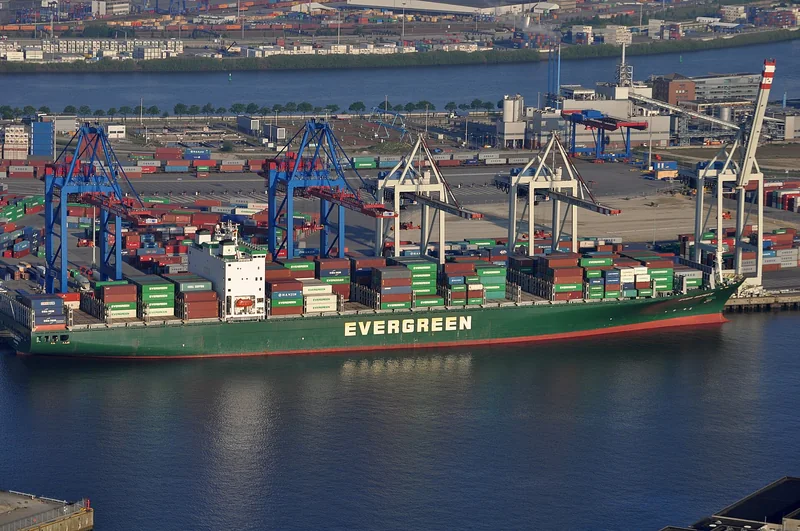
Green Evergreen container ship moored along a terminal quay.
Compare U.S. gateways

Which U.S. coast should you price first?

Delivery areaWhat to compare
Southern CaliforniaCompare Los Angeles or Long Beach, including the final truck leg and empty-container return.
New York, New Jersey or the NortheastCompare New York/New Jersey with a West Coast route plus cross-country rail or trucking to the same address.
An inland warehouseCompare available gateways, the named inland rail terminal, rail unloading and final trucking, with responsibility for each charge stated.

For each option, request three estimated dates: port or airport arrival, cargo available after release, and delivery to your address. Confirm who books any receiving appointment and whether the estimate includes it.

Compare quotes to the same U.S. address

Use the same cargo, China handover, U.S. address and ready date. Add missing pickup, handling or delivery legs. Compare totals in the same currency, with quote validity and separately payable charges stated.

Give your broker the product description, origin and declared value to check classification and applicable duty rates. For a duty-paid quote, identify the importer of record and duty payer. Compare DDP and DAP

Confirm the ocean ISF filing before loading

For standard containerized ocean imports, the ISF importer or authorised agent files the Importer Security Filing (ISF, or 10+2). Core data are due at least 24 hours before loading on the U.S.-bound vessel; stuffing-location and consolidator data have a separate deadline. ISF applies to vessel cargo only. U.S. ISF rule and filing deadlines

Appoint the filer before booking and follow its document cutoff. Supply seller, manufacturer, importer, consignee, stuffing-location and consolidator details through the requested channel.

Confirm the lowest-level bill of lading reported to CBP—usually the house bill for LCL—and obtain filing acceptance and bill-match confirmation. Arrange customs entry and release separately. CBP’s ISF questions and answers

Check Amazon delivery and importer requirements

Use the Seller Central destination and ZIP Code; quote each address if split. State parcel or truck delivery. For a non-partnered truck carrier, provide the BOL, Amazon reference IDs, FBA shipment IDs and tracking numbers. Confirm who books the appointment and obtain the delivery time. Amazon’s instructions for truck deliveries

Name an eligible importer of record; Amazon and its fulfillment centers cannot fill that role. Amazon’s U.S. import instructions

Clearance checkpoint before dispatch

Confirm the importer, licensed broker, ISF filer and bond arrangement before dispatch. Ask the broker or surety whether a single-entry or continuous bond suits the shipment. Check regulated solid-wood packaging for pest-free condition, debarking, treatment and an ISPM 15 mark; noncompliant packaging can be refused entry. CBP bond guidance · USDA wood-packaging rules

Time to the address

What changes the delivery estimate

Keep the cargo-ready date, quote validity and delivery deadline with the estimate.

Before departure

Goods readiness, pickup access, packing or consolidation, documents and carrier cutoffs.

In transit

Space, transfers, weather and carrier schedule changes.

After arrival

Examinations, cargo availability, storage, missed appointments and unloading delays.

Costs and receiving conditions

Compare charges and delivery requirements

Check which charges are included and which depend on the cargo, service or address.

MethodBilling basisExtra charges to checkDelivery requirements
Express courier to your doorHigher of gross or dimensional weight; quoted divisor, piece rounding and minimums.Pickup, residential or remote-area fees and other courier surcharges.Accepted cartons, supported ZIP Code and reachable recipient.
Air freight with final deliveryChargeable kilograms under the quoted weight rule; rounding and minimums.Origin and airport handling, clearance and final trucking.Vehicle access, appointment and unloading.
Sea freight + UPS / FedEx deliveryCombined door rate or sea plus parcel charges; check sea minimums and per-carton billable weight.Unpacking, relabelling, residential and remote-area fees.Carrier-accepted parcels and ZIP Codes; confirm each delivery address.
Ocean LCL + truck deliveryWeight-or-measure rule, minimums and rounding.Consolidation, unpacking, release, brokerage and inland delivery.Freight-station release, suitable truck, appointment and unloading.
Ocean FCL with final deliveryContainer size and route.Origin, terminal and release work; chassis, waiting, storage, empty return and any depot transfer.Container access and unloading within the booked slot.
Send your shipment details

Request a U.S. shipping quote

Include any existing quote, its endpoint and excluded charges so we can compare the remaining transport to your address.

Request a shipment quote

  • China pickup or handover address, contact, ready date and loading restrictions.
  • Goods, material or use, value, package count, outer dimensions and gross weight.
  • Batteries, liquids, magnets, timber, oversized pieces or other handling restrictions.
  • Importer, broker, trade term and available documents or approvals.
  • U.S. address, ZIP Code, home or business type, recipient contact and receiving hours.
  • Delivery deadline, preferred gateway and any parcel-carrier preference.
  • Appointment rules, vehicle access, and dock, forklift, liftgate or container-unloading needs.

Frequently asked questions

Should released cartons use UPS/FedEx or a freight truck?

Use UPS or FedEx for correctly labelled parcels accepted for the final ZIP Codes. Pallets, oversized pieces and freight needing appointments or special handling require a suitable truck. Compare sorting, labels, parcel charges, truck appointments and unloading to the same addresses.

What if pickup or express delivery fails?

Send the pickup or tracking number, current carrier notice, address and contact details. We’ll check the cause and available rebooking or carrier instructions. Confirm any redelivery, correction, hold or return charges before action.

Why can my 12 kg carton be quoted at 24 kg?

A bulky carton can be billed by dimensional weight. A 60 × 50 × 40 cm box equals 24 kg when the quoted divisor is 5,000 cm³/kg. Against 12 kg gross weight, that method uses 24 kg before rounding. Check the actual service divisor and per-piece rounding; a different air-freight calculation may produce a different result.

When must the U.S. ocean ISF be filed?

For standard containerized ocean imports, core ISF information is due at least 24 hours before loading on the U.S.-bound vessel. The stuffing location and consolidator information have a separate deadline. Appoint the filer before booking and use its earlier document cutoff. Confirm acceptance against the correct bill of lading; air shipments do not use this ocean filing.

How do I compare West Coast and East Coast delivery?

Use the same China handover, ready date, cargo and U.S. ZIP Code. Include inland rail or trucking and receiving appointments. Compare port arrival, cargo availability after release and final delivery, then the full cost for options that meet your deadline.

Do I need a U.S. customs bond?

Bonds are normally required for formal entries and may be required by the agency regulating the goods. Ask your broker or surety to confirm the requirement and whether a single-entry or continuous bond applies.

Do wooden pallets or crates need ISPM 15 marks?

Regulated solid-wood packaging entering or transiting the U.S. must be pest-free, debarked, treated and marked to ISPM 15. Plywood and pressboard are treated differently. Confirm packaging before pickup so the supplier can correct noncompliant pallets or crates.

Does using a broker remove the importer’s responsibility?

No. The importer remains responsible for entry accuracy and compliance. A broker can prepare the entry and arrange the bond; AndaFreight coordinates freight and document handover. Confirm the product description, value, origin, tariff treatment and responsible importer before dispatch.

WhatsApp Chat with us